Hiking Boots Hurt the Top of Your Foot? Causes and Easy Ways to Fix It
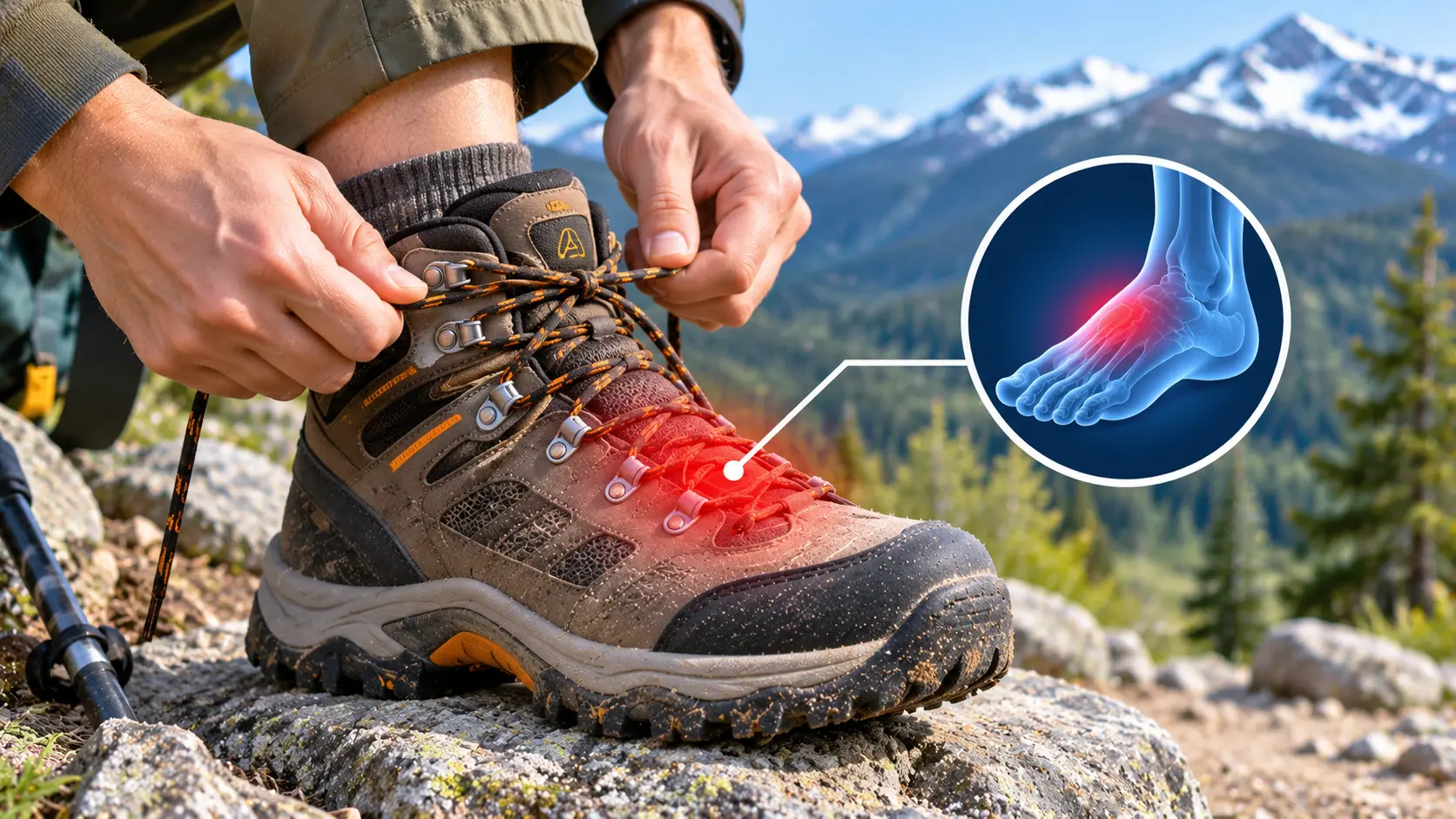
Hiking is a fun way to enjoy the great outdoors while also keeping fit. The problem with hiking is that it can become painful – especially if your hiking boots hurt the top of the foot. If you’re an avid hiker, you know that one of the issues is when hiking boots hurt the top of your foot.
Even an easy hike can cause pain and pressure in the top of your foot. Fortunately, this condition is commonly a problem of boot fit, lacing method, or footwear construction. With a few simple suggestions, you can alleviate pain and pressure to make for an easier hike.
Why Do Hiking Boots Hurt the Top of Your Feet?
If you ask yourself, “Why do my hiking boots hurt my feet?” then there are some reasons that you should consider. Once you know what the issue is, then you will be able to find a remedy.
Here are a few common causes of pain on top of the foot from hiking boots:
 Also readAre Trail Runners Good for Hiking? Pros, Cons, Verdict & Trail Advice (2026 Guide)Read now →
1. Hiking Boots Are Too Tight on Top
Instep pressure is probably the most common reason for discomfort; tightening the lace too tightly causes downward pressure on the upper part of your foot.
However, too tight can limit natural movement and leave you feeling sore, numb, or tingly. If your hiking boots are really tight on top of foot, you can loosen the laces around the instep.
2. Incorrect Boot Size
In addition, wearing a boot that is not the right size can cause discomfort. Too small boots can squeeze your feet while bigger boots can cause the heels to move about.
Even if a pair of walking boots fit perfectly, your feet could swell up when out on a walk. This could make the best walking boots feel tighter than usual.
3. Stiff Boot Materials
Boots are stiff when new and require breaking in. Until the material does, your foot may experience spots of pressure over the top of the foot.
If you hike in new boots you haven’t worn in, you may find them uncomfortable to hike in.
4. High Instep
Some people are born with a higher instep than others, so the upper part of their foot protrudes more.
This space here might be too tight in a normal hiking boot causing pressure on top of foot in hiking boots even if the full boot size is correct.
 Also readHow to Choose the Right Hiking Boots for Any Terrain (Complete Guide)Read now →
How to Stop Hiking Boots from Hurting the Top of Your Foot
If your hiking boots are hurting your feet, you don’t have to get rid of them right away. Here are some easy modifications that you can make.
One of the simplest ways to relieve pressure is to adjust your boot laces.
1. Adjust Your Lacing Technique
- Skip-lacing method: Simply miss out the eyelets that are right over the painful spot and this will take all of the pressure off the top of your foot.
- Window lacing: Leave some open space in the laces at the top of the pressure point to allow for some extra room.
- Looser instep lacing: Loosen the laces just a little in the middle of your foot while fitting snugly around your ankle.
- Heel-lock lacing: Near the ankle, perform this lacing method to keep your heel stabilized without tightening the entire boot.
Try out various patterns to see what is most comfortable.
2. Check Your Boot Size and Fit
Allow sufficient space around your toes and instep when fitting your hiking boots.
Put them on with the socks you wear when you hike, ideally toward the end of the day when your feet are a little bigger.
There should be some room for your toes to move and the top of your foot shouldn’t be squished.
 Also readBest Hiking Boots: How to Choose the Right Boots for Safe HikingRead now →
3. Break in Your Hiking Boots Gradually
New boots are an absolute no-go for long hikes.
Begin by lacing up indoors, then walking a short distance along flat trails. Work up to going longer distances as the materials loosen up.
It helps mold to your foot and minimizes the formation of painful pressure points.
4. Choose the Right Hiking Socks
In some cases, thick socks can create additional pressure in a snug fitting boot.
Opt for moisture-wicking hiking socks that cushion your foot without making your boots feel tight.
Another way to make your feet more comfortable and protect them is to wear seamless socks when hiking long distances.
5. Consider Different Insoles
Your feet might not be getting the support they require.
Maybe a different insole will feel better and spread the pressure more evenly depending on the shape of your foot.
If your boots are tight on the top, you should avoid thick insoles. They can prevent the boot from expanding and make the footwear feel even more constrictive.
How to Make Hiking Boots More Comfortable
Simply loosening the laces will not always make hiking boots more comfortable.
Keep these following suggestions in mind:
- Moisture causes chafing, sometimes even more than rubbing friction. Use good socks, ones that are ‘breathable’ and change if needed.
- Rest your feet: Allow your feet to take breaks when hiking longer distances.
Don’t overdo the tightening: They should hold you, not cut off circulation. - Select the right footwear: if you have wide or high-volume feet, consider hiking boots with a wider instep.
- Testing boots before hiking: Walk on various terrain to see if you notice any areas of pain or pressure before a hike that you will have to struggle through on a difficult trail.
A few tweaks like this can make all the difference to ensure that hiking boots don’t lead to sore feet – helping to make your time outside more enjoyable.
When Should You Replace Your Hiking Boots?
If pain persists, your shoes may just not be a good fit.
Should you still feel pain after another lacing, sock change, and insole change, get a different pair.
Check out boots with:
- A spacious upper design.
- Adequate instep clearance.
- Soft, flexible materials designed to flex naturally with your feet.
- Proper cushioning and arch support.
- A snug fit around the heel and ankle.
Keep in mind that not all high-cost hiking boots are the best. The ones that will truly serve you well are those that will be able to fit your foot shape and last long.
When to Seek Medical Advice
If tight footwear causes infrequent aching, this may resolve when your boots are altered. Do not ignore severe aches.
If you have swelling, numbness, burning, great pain, or discomfort beneath your boots after you remove your boots, then it’s in your greatest curiosity to hunt for skilled assistance.
Sometimes, foot pain can be caused by something else other than shoes.
Conclusion
If your hiking boots are bothering the top of your foot, it’s likely due to uneven lacing, not enough room around the instep, your boots being too small, or stiff shoe materials. There are easy fixes, though, like getting into a better lacing pattern, wearing the right socks, and breaking in your shoes.
The right shoes that fit well and provide the support you need, will help you enjoy the trail rather than cry over your aching feet.
FAQs
1. Why are hiking boots causing pain at the top of my foot?
Ans – Hiking boots may be giving you a pain at the top of your foot as a result of tightened laces, inappropriate fitting, material rigidity, or high insteps.
2. How can I prevent my hiking boots from hurting my feet?
Ans – Loosening your laces, applying a skip-lacing technique, using comfortable hiking socks, and choosing the correct fitting for your boots may alleviate pain in your feet.
3. Is tightening laces able to cause pain at the top of the foot?
Ans – Yes, as tightening your laces causes pressure on your instep area causing pain, numbness, or a sensation of pins and needles.
4. Which socks are best for my hiking boots?
Ans – Breathable, moisture-wicking socks designed specifically for hiking should be chosen. Also, try wearing lightweight cushioned hiking socks.
5. When do I have to replace hiking boots?
Ans – It is time to change your boots if you still experience pain in spite of making necessary changes regarding fitting and lace arrangement. Your new pair of boots should have room for your instep and provide sufficient cushioning.
Related Blogs –
Winter Hiking Boots vs Snow Boots
Rajat Pathania is a hiking enthusiast who studies trails, hiking safety, and outdoor preparation. He shares practical insights based on field experience, gear testing, and research about trekking conditions. His work focuses on helping hikers understand trail planning, safety practices, and essential hiking skills for better outdoor trips.